Our trip spanned from January 2024 – June of 2024. We started in Patagonia, about as far south as you can go on the continent. In January you are at the height of summer in this part of the world. The idea was to begin here and travel north, following the summer weather. By the time South American winter started to roll in around May, we would be crossing into the warm tropics. May also corresponds to the end of rainy season in the tropics, giving us a better chance of generally dry weather.
I was super happy with our timing and the weather panned out perfectly for each region. We managed to hit the right time of year for all the activities on our list.
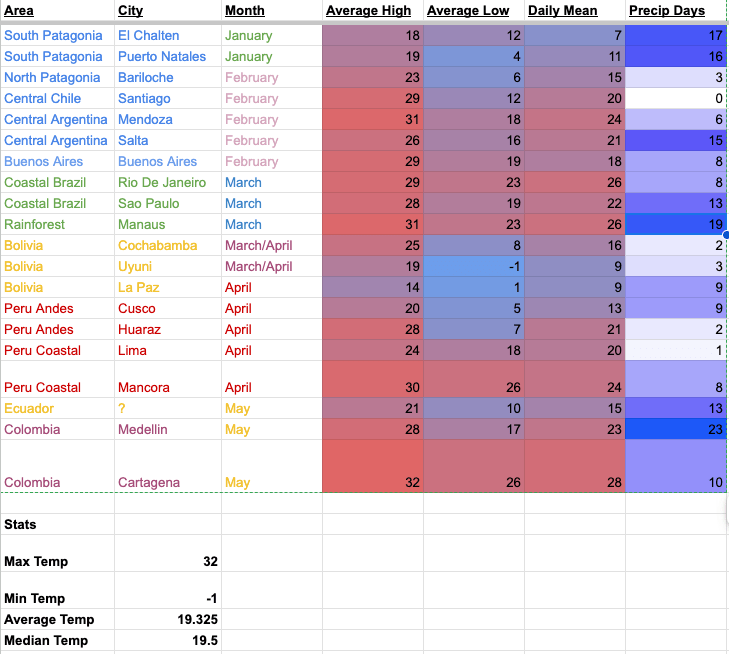
I put together the below climate chart (All Degrees Celsius) before we left to gauge how we would need to pack. It was quite the range and we did need clothes for consecutive humid 40 degree days and consecutive nights camping hovering right around freezing.
Packing list for the overall trip is below, we each carried 45L backpacks for the whole trip, and each had a small MEC Travel Lite Day Pack that folds into a tiny little pouch when not needed. For the climbing and camping gear, we had a 70L rolling bag that needed to be checked on flights. We camped approximately 40 nights over 5 months. Bringing our own camping gear in the 70L did off set the costs of having to check the bag on flights, and there was storage at hostels when we wanted to go off on shorter 2-6 day trips without it. I go into more detail in the Patagonia sections, but if you enjoy camping it is 100% worth it to bring gear to Argentina and Chile.
If we were to ditch the camping and climbing gear, we certainly would have got by on 45L bags. I would highly recommend that size as it forces you to pack smart and allows you to carry on for flights, saving time and money.
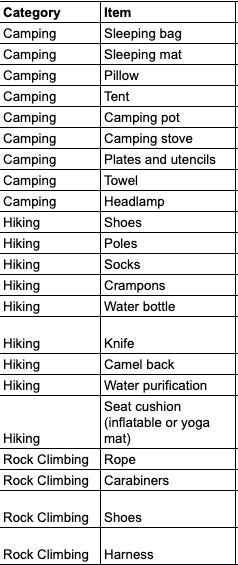
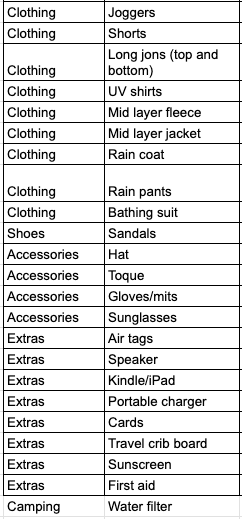
For layers, I would recommend bringing some really lightweight, loose fitting pants and long sleeves for the tropical areas. Mosquito borne illness like dengue fever can knock you out for a few days, we fortunately didn’t experience it, but many fellow travellers did. Ideally clothing made of polyester, or even better, nylon, will keep mosquitos away. Having some long clothes that you can wear in the evening heat just gives you one less thing to worry about and you won’t need to drench yourself in bug spray.
We also kept photocopies of passports, drivers licenses, and yellow fever vaccine certificates in case they were lost or damaged. One thing I did not pack and ended up purchasing early on was a camping coffee mug. If you drink coffee, you will want one as it can be hard to come by in the smaller towns.
Some of the specific clothing/gear items we brought that I was super happy with:
- Lighter Mid Layer – Patagonia R1 TechFace Hoody
- This is the single best piece of clothing I have ever used. I wore it essentially every day on the trip and still use it for everything from hanging out on a cool evening, climbing/hiking on brisk mornings, to -20 backcountry days in the winter.
- Warm Mid Layer – Arcteryx Atom Hoody
- This one is a bit pricey, but it is very versatile and great when it gets real cold. Super comfortable and packs down.
- Rain Coat – Patagonia Torrentshell 3L Jacket
- Value is incredible here, I have used so many rain coats that soak through and this one does not while still packing light.
- Base Layers – SmartWool Mens Classic Thermal Merino
- The merino base layer is a must. We would wear these literally non-stop for 6 days straight in the backcountry, they stay dry and don’t smell.
- Water Filtration – Life Straw 3L Gravity Filter System
- We used this heavily throughout the trip, it was great in the backcountry as well as for filtering tap water in Bolivia, Peru, and Brazil.
- Tiny Bag – Mec Travel Light Daypack
- Folds up into a tiny pouch when not needed, an incredible piece of travel gear
- Larger Backpacks – Gregory Targhee 45 and Osprey Kyte 48
- The Targhee is a ski touring bag but I use it for everything, the rear zipper exposes the whole pack which is great for travel.
- Not much needs to be said about the Kyte, as good as it gets for a carry-on sized, long overnight hike bag.
- Sleeping Bags – Nemo Disco -9 celsius (15F)
- Down bags that pack up super small. They do get a bit warm if the overnight temp. is above 10 celsius. But this never happened in Patagonia or the high elevations in Peru & Bolivia.
W Trek Packing
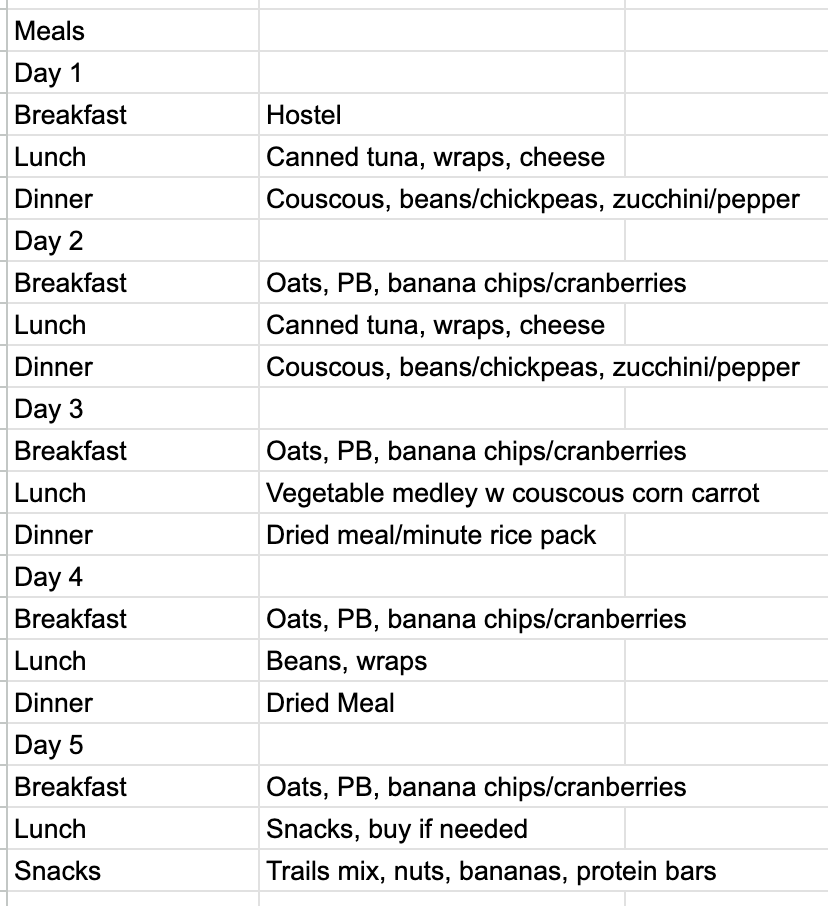
Our W Trek journey was 5 days, 4 nights, and 100km on the trail, you can read more details in the Chile page. Packing list is as follows for both food and gear. There were refugios at all the campsites we stayed at, 6 total along the length of the trail, all with food and places to fill water. We brought a water filter on this trek but did not use it. All the surface water in streams and rivers was drinkable. Our hiking dates were January 16-20, smack in the middle of summer.
It’s nice having the refugios for a fall back option with food and water. However, keep in mind they are VERY expensive, i.e. $25 for a mediocre pizza that was probably frozen. If you can save your money and cook you won’t be missing much. I would recommend having a beer at one or two of them. A cold draft beer deep in the backcountry is an experience that is tough to replicate, at least here in Canada.
Gear List
Food:
- 45 L Backpacks – Same that we brought
- Light mid layer
- Warm mid layer
- Rain Coat
- Rain Pants
- Merino base layers
- Hiking shoes – Mid height ankles
- Tent – Mckinley Escape 2
- Sleeping Bags
- Toques
- Buff – Good for the wind
- Hiking Pants – Did not need shorts
- Merino Gloves – MEC Liner Gloves
- First Aid Kit1
- Water Filter (Did not use)
- Camping Stove – MSR Pocket Rocket 2
- Fuel – Note there is lots of fuel left behind at refugios, you could get away with not bringing
- Sitting Pad – Piece of yoga mat
- Garbage bag
- Pocket Knife
- Cooking pot
- 2 Bowls
- Cutlery
- Lighters
- Dish soap
- Headlamps
- Toilet paper
- Hiking poles
- Portable charger
- Sunscreen
- Toothbrush/paste
- Towel – There are showers
- Camel backs
Huayhuash Packing
We ended up doing a 6 day version of the Huayhuash ending in Huayllapa. Slightly shorter than the full loop as we needed to get back to Lima. Details in the Peru section. This was the ultimate test of a 45L bag, and I’d say probably the max. number of nights you could do in cold wet conditions without a larger bag. We got it all weather wise, warm days, pouring rain, frost in the mornings, and strong winds.
Essentially all our food was dried, and we rehydrated with water. A water filter is key on this trek. Due to the high elevation and cold temps you will use a ton of fuel trying to boil all your water. The whole trek is above 4000m at which point water boils at only 86 celsius. It is recommended to keep water at a rolling boil for 1-3 minutes at this altitude, which will drain your fuel especially in the cool mornings and evenings. Ideally use a filter for drinking water and boil for cooking so you don’t have to bring too much fuel.
Food Plan:
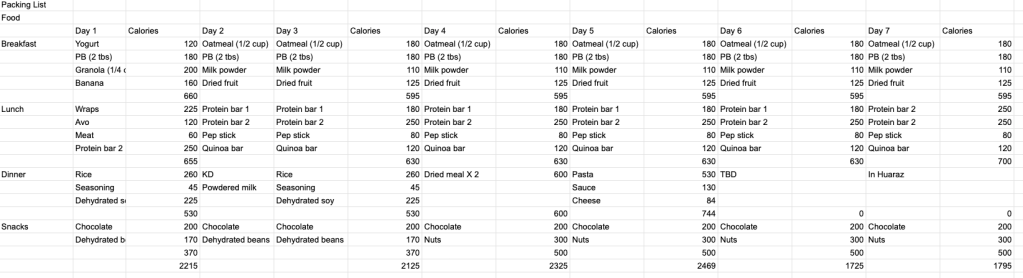
Grocery List:
- 2 Yogurts
- Peanut Butter – in ziploc
- Granola – 2 cups
- Banana x2
- Tortillas – 1 pack of 8-12
- Avocado – 1
- Deli meat – 1 pack
- Cheese – 1 pack
- Mayo
- Salt
- Protein bars – 24
- Quinoa bars – 12
- Peperoni sticks – 12
- Oatmeal – 8 cups
- Milk Powder – 4 x 96g packs
- Dried Fruit – 3 cups
- Ramen Noodles – 2 packs
- Chocolate – 10 small bars
- Habas chips – 3 cups
- Nuts / Trail Mix- 6 cups
- KD – 2 boxes
- Rice – 2 cups
- Rice seasoning – 1 pack
- Dehydrated Soy – 2 bags
- Pasta – 2 cups
- Pasta sauce – 1 pack
- Parm cheese – 1 pack
- Instant coffee
- Chai latte mix – from home
- Liquid IV / Electrolytes
- Vitamin C tabs
- Tea bags – No caffeine
- Coca leaves !!!
Gear List:
- 45 L Backpacks – Same that we brought
- Light mid layer
- Warm mid layer
- Rain Coat
- Merino base layers
- Hiking shoes – Mid height ankles
- Tent – Mckinley Escape 2
- Sleeping bags
- Sleeping pads
- Toques
- Buff – Good for the wind
- Hiking Pants – Did not need shorts
- Merino Gloves – MEC Liner Gloves
- First Aid Kit1
- Water Filter – ABSOLUTE MUST
- Camping Stove – MSR Pocket Rocket 2
- Fuel – 1 large 16oz can. I would recommend bringing an additional smaller can to be safe.
- Sitting Pad – Piece of yoga mat
- Garbage bag
- Camping pillow
- Pocket Knife
- Cooking pot
- 2 Bowls
- Cutlery
- Lighters – at least 2
- Dish soap
- Headlamps
- Toilet paper
- Hiking poles
- Portable charger
- Sunscreen
- Bug spray – did not use
- Toothbrush/paste
- Towel
- Extra batteries – headlamps
- Camel backs – necessary
- Cash – 800+ Soles for community fees and buses. Do not forget!
- Crib board and cards
- Glue for repairing pads
Note that the two packing lists for each trek are very similar, and the weather conditions on trail were also very similar. The biggest differences are in the food and fuel. I would recommend talking to people in Puerto Natales and Huaraz before you embark on each hike. We met a few people who found the “dried soy” in Huaraz. Never would have considered it ourselves, and although it tasted pretty bland, it offered good lightweight calories on the trail.
Feel free to reach out with any packing questions for these treks or the trip in general!
- First aid kit contents: Electrolytes, Blister pads/bandaids, Advil, Pepto-bismol, Acetazolomide/Diamox (Altitude sickness pills), Vitamin C, Azythromycin (Antibiotic for extreme stomach issues), Polysporin, Rubbing alcohol, Hand sanitizer, Gauze, Tape. ↩︎
 Go West